
Building resilience through diversification: Adrian Bowcher on the future of independent schools
This is a written interview based on a recorded conversation with Adrian Bowcher, Chief Finance and Operations Officer at the Dean Close Foundation in June 2026.
Adrian Bowcher, Chief Finance and Operations Officer at The Dean Close Foundation, believes independent schools need to think more commercially, use their assets more intelligently and build broader income streams if they are to thrive in a changing market. In our interview, he explains how Dean Close has evolved its structure, grown its commercial activity and nurseries, and why a long-term, diversified strategy is essential for resilience.
Q: Can you start by telling us a little about your role and what you do?
My current role is Chief Finance and Operations Officer – a role formerly known as Bursar – at The Dean Close Foundation. I oversee the operations of the schools, nurseries and commercial activity, as well as the financial side and running our two trading subsidiaries. In practice, it is pretty much most things except marketing, HR and education.
Q: How has your role evolved?
We developed a desire to diversify very early on. In fact, that was my pitch for the job in the first place. I looked at the accounts and saw that the senior school made money and nothing else did. Upon starting, the Board wanted to roll out that strategy, so we have been gently and cautiously diversifying ever since. We created the foundation a couple of years after I started, and the reporting structure changed accordingly. We now have all shared services in Dean Close House: finance, payroll, HR and so on. Central services mean we do not need to duplicate or triplicate cost. This is a very strong strategic advantage.
Q: What led you to your current role?
I started in commercial banking and corporate finance, where I spent 16 years. I had always wanted to do a full-time MBA in Finance, so when the time came, I did that for a year. As I was coming to the end of the MBA, I saw a very cryptic advert in the FT. I assumed it was going to be a CFO role in the City for a large charity, but it turned out to be an American school outside London.
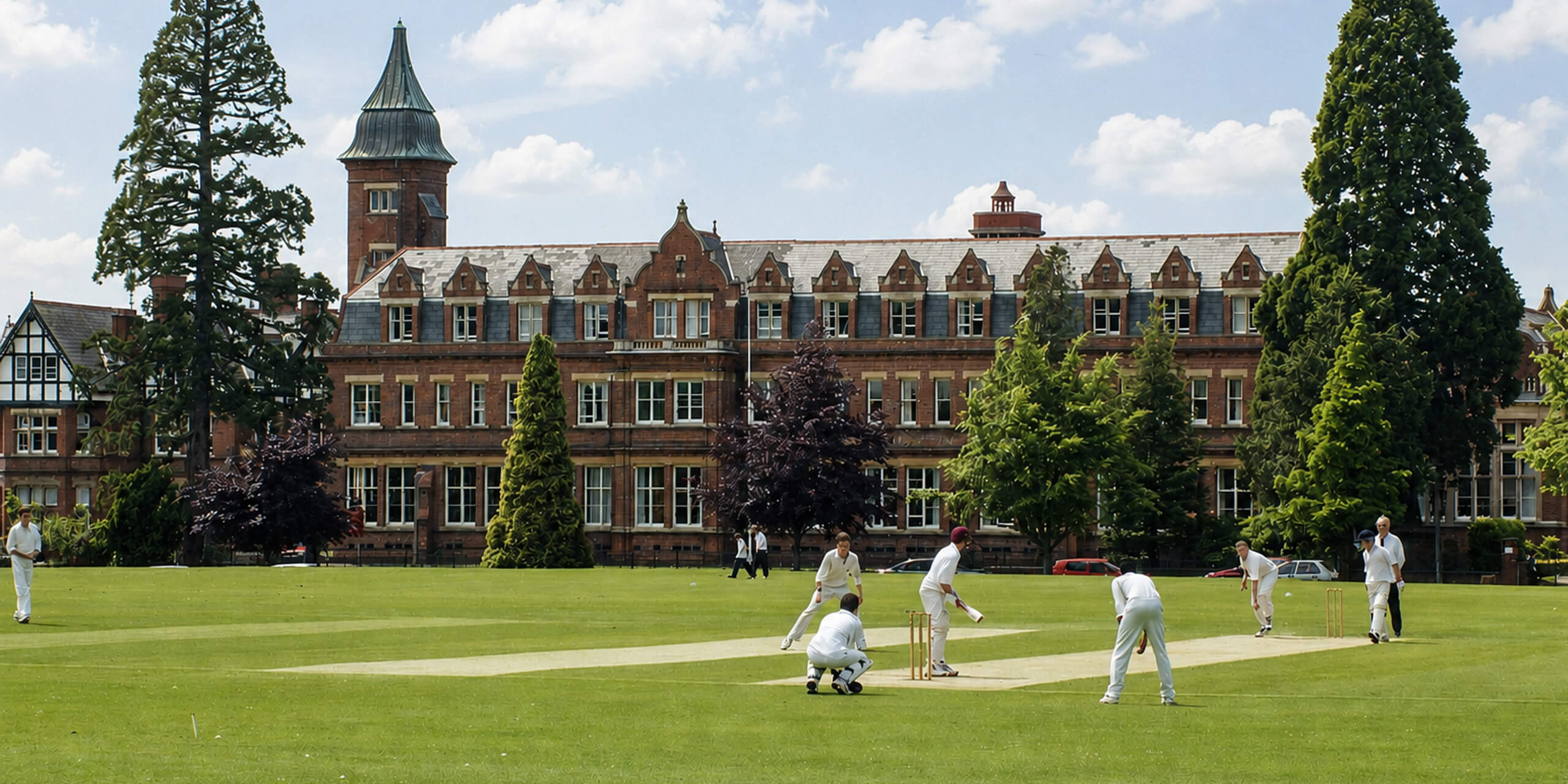
It was a quick turnaround. The school was not in distress – far from it – but it had grown very quickly and needed restructuring and financial discipline. I thought I would go in, put things in place and move on. But I found myself in an environment where you look out of the window and see cricket being played, drama happening and a whole life of the school around you. It became a much richer environment, so I stayed.
I then worked in international schools for 16 years before returning to the UK when my son was about to enter Year 7. My children actually started at Dean Close before I did. I have only been in a traditional English school since 2014; before that, it was international schools.
Q: What surprised you when you moved into the UK independent school sector?
I was surprised at the lack of commerciality across the sector. There are a few schools that have always done it well, but it struck me that so much of the risk sat in one pot. If your senior school dropped by 10, 15 or 20 pupils, the whole thing became a struggle for that year. Investment slowed down, strategy stopped, and it was simply too risky.
I was also struck by the lack of cost control. Fee inflation over the last 30 years has probably been worse than in most sectors, and I think that is partly because the financial discipline and commercial thinking has not been there.
Schools often have enormous estates, but they are closed for a third of the year. If you put it in business terms, investing hundreds of millions of pounds in assets and then letting them sit still, costing you money, for a third of the year is quite extraordinary. At Dean Close, we had professional theatres and fantastic sports facilities, but we were earning very little from them. The commercial side was the first focus area I really developed, so that it could generate sensible profit to add into the pot.
Q: What are the biggest challenges and opportunities facing independent schools now?
This is a shrinking sector. The costs, particularly regulatory and government-related costs, have added millions of pounds to our cost base. If you look at TPS, VAT, National Insurance and rates over the last six or seven years, they have cost us millions every year. Inevitably, that feeds through into increased fees, and so the market is dwindling.
Most of our parents are working very hard and making real sacrifices to keep their children at a school like ours. That is a great worry. At the same time, the sector has not historically been good at cost control or efficiency. We must think about how we organise ourselves more efficiently and be more corporate in our planning and organisational design.
Changing entrenched practice is extremely hard. It takes careful negotiation and persuasion. But as the sector reduces, supply will reduce too. There will be a difficult few years, but the stronger schools will emerge leaner and stronger.
I am also concerned about the international market. The Chinese market in particular is reducing, and boarding is dropping across the sector. We are not seeing that particularly, but other schools are struggling. Visa processes can also be difficult and expensive, and parents can give up because the process is so hard and the cost increasing.
On the positive side, schools have very large estates and can do a lot with them. We need to ensure those assets are working all year round and in different ways. If you choose to subsidise the schools through other activities, that can be a strategy. You do not necessarily have to have every school activity profitable if the other parts are performing well. It is a different mindset.
Q: How do you think about diversification?
Our shared services are a strategic asset. We now have teams of specialists working with a number of schools from one place. It also gives people better career paths. In a single school you might have two people in finance, and that is it. In a group, you can have a finance team of 10 or 15, with the opportunity to build a career.
As we have generated savings, we have reinvested some of them in specialists: business analysts, database managers, management accountants and others. Those roles help us knit things together and become even more efficient. When schools or nurseries join the group, some costs fall away immediately, and others fall away over the next couple of years. That is a real strength.
Q: What has helped you unlock commercial opportunities?
One of the key things was getting the right staff in and giving the commercial company confidence and discretion. In the past, people running commercial companies in schools often had no autonomy and had to refer everything back to the school. We had to give them decision-making autonomy within clear protocols.
In the holidays, they can work freely. In school time, they work within protocols and set times for letting facilities. That means they can make decisions quickly. Previously, we were getting lots of enquiries, but many were not fulfilled because there was too much bureaucracy. A profitable commercial opportunity could become too much hassle and simply not happen.
By clearing the path and giving the team a clear mandate in defined areas, the activity took off. The enquiries were always there, because schools have good estates and are good citizens in their communities. They just needed a structure that could service those opportunities without being slowed down by bureaucracy.
Q: What does commercial use of school assets look like in practice?
Most independent schools have substantial estates, including sports facilities, theatres and classrooms. As we have grown, we have split our commercial company into four divisions: theatres, retail, commercial lets, and camps and courses.
Most enquiries come through commercial lets and camps and courses. Commercial lets could mean renting football pitches, classrooms or theatres. It might be a performance over the summer holiday, a residential let, or groups of foreign students coming over. That is probably the largest income generator.
Camps and courses started from zero, but we have developed our own branded offers over the years. For example, Dean Close Easter Revision Course allows pupils to come for intensive A-level or GCSE revision, either as day pupils or boarders. Around half the pupils and half the teachers are not from Dean Close.
We also have Dean Close Swim Club, where children can start learning to swim from the age of three. We run immersion courses for groups from countries such as Italy, China and Hong Kong who want a taste of English education. They might come for two, three or four weeks, spend some time in the classroom, go on trips and board with us. Add in sports camps and other activities, and it becomes a real mix of business opportunities.
Q: What is working well about your strategy?
A change of mindset allows a much stronger and more powerful strategy. Our strategy is 40-40-20: over a five-year period, we want 40% of profit to come from schools, 40% from nurseries and 20% from commercial activity. That breadth matters. If we have a blip in one school, a nursery or the commercial company, we do not worry in the same way because we have breadth of income and profit. It means the strategy can continue to move forward.
Independent schools need to think long term – 50 or 60 years, not two or three. Of course, we look at the data every month, but we do not panic if three-month figures are down. A 40-40-20 strategy allows us to concentrate on schools and education while also building the other elements that allow everything else to work. It gives us the confidence to continue investing.
We achieved 40-40-20 last financial year (2024), but with VAT coming in we chose to absorb more than half of it, so we knew schools would underperform for a couple of years. Again, it is a five-year strategy. We expect it will come back, and the nurseries and commercial company are performing very well.
Q: Why have nurseries become such an important part of the model?
We have invested into nurseries in a big way. We now have nine standalone day nurseries, with another two or three lined up, and we are looking to grow further because it fits so well with what we do. We understand regulation and we understand children, so it is a natural extension of our work in the same regulated educational space.
Nurseries have gone well for us, we now have more than 2,500 children because of the nurseries. I think this model could work for many other schools because it draws on the same core skill set. However, the Board must be prepared for change. You are dealing with a different regulator, a different set of problems and different inspections.
As we grow, we also must think about how the Board evolves. You cannot continue with the same committee and responsibility structure as you had when you only had one school. Dealing with growth is an evolution, and we have evolved a couple of times already. We will need to change again, and that is an interesting next piece for us.